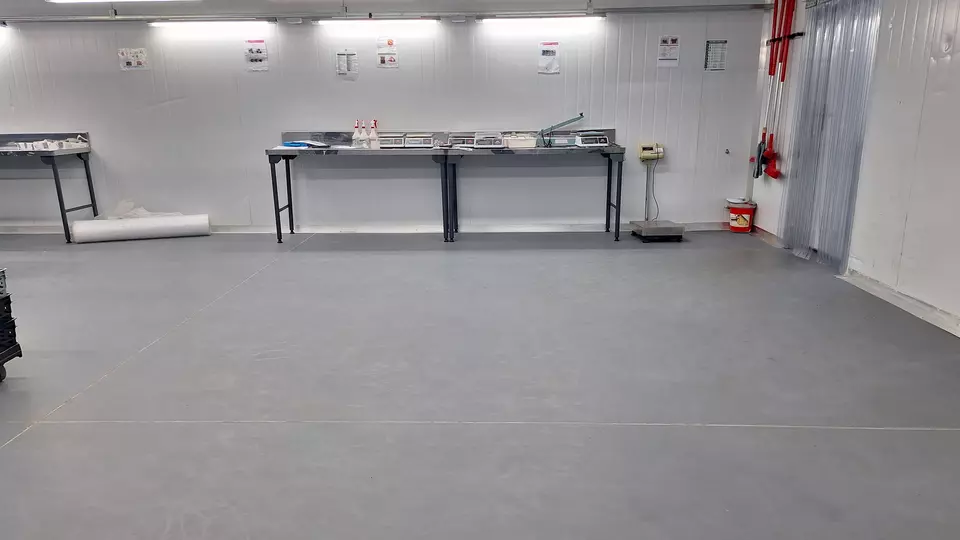
Fruit Packaging in Midrand
The installation of a polyurethane screed in a food manufacturing facility requires thorough surface preparation, including cleaning to remove contaminants such as grease, oil, and food particles, as well as grinding or shot blasting to ensure a strong bond between the screed and substrate. Cracks and damages in the floor are patched before an epoxy or polyurethane primer is applied evenly to enhance adhesion. The screed is then mixed according to manufacturer instructions and applied to the floor with a trowel, achieving a smooth, even finish with a non slip texture Laid to a thickness of 6 9 mm, the screed provides durability and impact resistance in high traffic areas. After curing for 24 48 hours, the floor is HACCP compliant, offering chemical and physical resistance to acids, alkalis, and cleaning agents, ensuring a safe, non slip surface suitable for wet areas in food processing environments.